Saturday, June 4, 2016

Whisky I've Drank: Ardbeg Islay Single Malt 10 Years Old


By Jason Debly
Bonfire on a Bluff?
Having a glass of Arbeg 10 year old in your living room is like building a bonfire made up of tree branches, scrub brush and peat freshly cut from a Scottish bog, lighting it and watching the smoke swirl upwards as it is carried away by the unpredictable winds of the Isle of Islay, Scotland. The smoke at times will fill your nostrils followed by the peat, charcoal and a whiff of salty sea spray. Ardbeg 10 year old is uncompromising like a lazy wind blowing off the coast of the Isle of Islay. It's so cold and 'lazy' that it feels like it blows through you rather than around you. Such is the experience of a dram of this single malt scotch whisky.
Isle of Islay
Ardbeg is one of eight distilleries on the Isle of Islay, an Island off the coast of Scotland that can have wind, rain and a crashing sea on a regular basis. The geography is rocky, relatively flat, with plenty of bluffs, jagged outcroppings of rock, and cliff faces above a churning white-capped sea below. Whiskies distilled on this island are often very peaty, smokey and kind of like the flavor of a menthol cigarette. Peat actually plays a large role in the smoke flavor of this scotch whisky and the others of the Isle of Islay.
What is Peat?
On the Isle of Islay there are bogs and wetlands with plenty of partially decayed vegetation like scrub brush, tall grass, and other low lying vegetation. It is cut out in blocks and when dried is used to fuel fires to dry the malt used in scotch. The interaction of the smoke from the peat imparts the unique smokey flavor that is termed "peat" or "peaty" when describing scotch whiskies especially from the Isle of Islay.
Suggested Stemware
Glencairn would be best. Don't have that? Try a brandy snifter. The bowled shape with the opening at the top traps the aromas to be enjoyed as you nose it. A crystal tumbler doesn't 'trap' the scents of this whisky. Nevertheless, the tumbler is better than nothing and drinking from one will certainly not affect the flavor profile, just not deliver the full bouquet on the nose.
Ice? Water? Neat?
Decisions, decisions, decisions . . . If you are a novice scotch drinker, I would recommend adding an ice cube or two, it will dampen the pronounced peaty flavor profile and take away some of the 'bite.' If you enjoy scotch and consider yourself quite serious about it, I would recommend a teaspoon of distilled or spring water be added to a single or double pour (you will have to experiment to see what works for you). The water will add a lot of complexity. I find 'neat' it is just too over the top.
If you are a veteran drinker, well then pony up and get ready to ride this flavor profile like "Seabiscuit."
Nose (undiluted)
Beautifully strong peat, wood smoke and salt air. The aroma of peat is so powerful, that often after having had my drink, washed my glass, returned it to the cupboard, gone to bed, up and off to work, back home, late evening retrieve my glass, and wow! I still smell peat in my glass! And not just any peat, but rather distinctively that of Ardbeg.
Palate (undiluted)
Starts sweet, mid palate fills with damp wood smoke before moving to drying black pepper and more billowing smoke like a big Cohiba.
Finish (undiluted)
White cheddar to salt to fresh ground black pepper. Slight burn remains on the throat after it is swallowed.
General Impressions
Not what I would call “smooth” scotch if consumed neat. On the other hand, I would not describe it as “rough” either. Instead, I would describe this scotch having a flavor profile that involves an “abrupt” transition from sweet smoke to sharp black pepper and coarse salt. Not a flavor profile that I would describe as "complex" when consumed neat. You need to add water (ie. teaspoon) to bring out the complexity and magic of this dram. Really, water is a must!
This single malt enjoys a large following among serious scotch drinkers, and I do understand the fascination. The flavor profile is unique and a very powerful, yet elegant explosion of smoke and peat upon all the senses. You will come back to this whisky again and again, as you analyze its secrets.
Initially, I didn't understand what was all the fuss about this spirit. But that first tasting haunted me. It beckoned me back. The nose of peat and wood smoke, a promise that was fulfilled on the palate was fascinating. I must say I like this, but not my favorite. I like it, but not the way I am obsessed with Cragganmore 12 yr old, a scotch that I systematically bought all remaining bottles where I live upon learning the distributor was cutting my liquor store off.
This is not a mainstream spirit. It is for the scotch connoisseur seeking a very unique flavor. If you are considering purchasing this as a gift for someone, and not knowing their individual tastes, I would recommend choosing another single malt that is more pleasing to the average drinker.
Water really needs to be added to this malt to bring out a more complex display of flavors. Teaspoon to a double pour I find is just enough. One must remember that it is bottled at 46% abv. I find that over 43% many malts benefit from the addition of some water. Ardbeg 10 is not an exception to such a general rule.
I am surprised by my conclusion on this scotch. I thought I would enjoy it more given all the praise I have read in books and elsewhere online. It's more than ok, but I would not buy it again. I certainly do not agree with the praise rendered by the scotch expert, Jim Murray, who wrote: "Unquestionably the greatest distillery to be found on Earth. If perfection on the palate exists, this is it."
Cheers!


By SingleMaltBrasil
Os maltes da Ardbeg são os mais enfumaçados de Islay com 50ppm de fenóis (a maioria dos maltes de Islay têm entre 20 e 40ppm de fenóis). A Ardbeg foi fundada em 1815 e ficou inativa durante parte da década de 80 e 90. Em 1997 foi comprada pela Glenmorangie plc e reaberta.
A destilaria vem ganhando vários prêmios recentemente, sendo considerada uma das mais criativas e inovadoras da Escócia.
Teor alcoólico: 46%
Volume: 750 ml
Notas de degustação:
- Aparência: Dourado.
- Olfato: Explosão de fumaça, turfa, algas marinhas e alcatrão. Toques de limão, pera, maçã e cereais.
- Paladar: Profusão de sabores. Seco, salgado, cítrico e licoroso. Baunilha, tabaco, café e especiarias.
- Fim de Boca: Longo. Enfumaçado, seco e com notas de turfa, cereais e algas marinhas.
- Conclusão: Talvez o melhor malte de Islay. Balanceado, complexo e rico em aromas e sabores.

Saturday, May 28, 2016

Whisky I've Drank: Wild Turkey 81 Proof


By Josh Peters

A few years back Wild Turkey 81 replaced the not-so-popular Wild Turkey 80. Wild Turkey 80 was a 4 year bourbon that was watered down from barrel proof to meet the minimum legal proof (80) to be considered a bourbon and was rather lack luster. The 81 is only 1 proof (.5%) higher in alcohol content which still doesn’t bring the kick I like in my bourbon, but it is a blend of 6-8 year old whiskey that does bring with it some extra maturity and a bit more flavor. Compared to the 80 it’s a vast improvement. Compared to the amazing Wild Turkey 101… well there just isn’t any comparison.
Overall this is a decent bourbon. It’s not a stellar world class bourbon like the 101 and the Rare Breed, but it mixes easily in cocktails where you don’t want a strong bourbon taste. The bourbon pro probably won’t find anything interesting in it when drank neat, but the bourbon novice definitely will. The basic bourbon flavors and aromas are all present and if you think of it more as bourbon training wheels than a serious contender to the Wild Turkey throne it’s easy to see that it’s good for what it is. A simple and approachable 81 proof bourbon that still manages to deliver some quality bourbon flavor.
If you’ve had the Wild Turkey 81 add your own thoughts or notes in the comments below. I’d love to read them.
Wild Turkey 81 Review
ABV: 40.5%
Price: $16 (750ml)
Distiller: Austin Nichols / Wild Turkey
EYE
Light honey
NOSE
Bourbon spice strolls out of the glass. It’s not a powerful aroma like it’s big brother, but it isn’t completely lack luster either. The usual characters of caramel, vanilla and oak show up with some orange zest and corn sidekicks.
TASTE
Bourbon spice is again the first to arrive but this time it brings a bit of cinnamon with it. Caramel, corn on the cob, ‘Nilla Wafers and some bitter orange meander onto the palate along with a hint of raw alcohol. Which is a bit strange considering it’s been cut down.
FEEL
This is where I start to struggle with it. It’s a bit watery and has almost no body to it at all. Smooth whiskey should still have a bit of bite to it, but here it’s missing completely.
FINISH
Surprisingly long finish of corn, caramel, wood and alcohol that fade out to a caramel coffee syrup (think Torani) and alcohol. That hint of alcohol which was initially on the palate gets stronger as the other flavors fade. Not my favorite finish in bourbondom, but definitely not the worst.
SCORE: 81/100

Saturday, May 7, 2016

Whisky I've Drank: The Hakushu Distiller´s Reserve Single Malt


By Ruben Luyten
Earlier this year, Suntory launched two NAS expressions as part of the core ranges of Hakushu and Yamazaki, both named Distiller’s Reserve. Hakushu Distiller’s Reserve joins the 12 Year Old to form the standard range of this Japanese distillery.
As a NAS expression, the Distiller’s Reserve contains different spirits: young lightly peated malts (8 years and older), heavily peated malt and whisky matured in American oak for around 18 years. All the casks have been hand-picked by Suntory’s Master Blender, Shinji Fukuyo.
Hakushu ‘Distiller’s Reserve’
43%, OB 2014)
Nose: 
very fruity and aromatic with plenty of vanilla. Unripe pears and apples, melon and lemons. There’s also a grassy / minty note (slightly new-oakish) as well as something of cucumber. A subtle smokiness in the background. Pine wood. Mouth: again a bright fruitiness, but with more oak and more herbal notes now. Lots of zesty notes, slightly bitter, especially grapefruit. Again some pine wood and gingery notes, as well as earthy overtones. A little on the young side now. Finish: medium long, soft smoke, green fruits and wood.
One of the advantages of a NAS is the ability to bring together aromas that are normally linked to different ages. This is the first time that I think this idea actually works well, at least on the nose. On the palate you can’t stop thinking it’s young whisky trying to feel older. Nonetheless decent stuff, reasonably priced. Around € 50.
Score: 84/100

Saturday, April 23, 2016

Whisky I've Drank: Suntory Whisky "Kakubin"


By Jan van den Ende
Country: Japan
Brand: Suntory Kakubin Yellow Label
Type: Blended Japanese Whisky
Age: NAS
Alcohol: 40%
Colour: Dark Golden
Nose: 
The Alcohol is quite present so please give the Kakubin enough time in the glass to open up. The Kakubin is immediately recognisable as a Japanese whisky as the Aroma is quite distinctive. I'm nosing on the edge of the glass as the Alcohol remains strong. I find Floral and Fruity tones, young Grain Alcohol, Brown Sugar, Caramel, Plums, Sweet Candies, young Bourbon, Nuts, Cinnamon, Vanilla, light Honey, light Coconut Water and a little Citrus. It's nothing special but better than your average cheap Scottish Blend. I would rate it even higher if not for the sharp Alcohol that spoils a bit of the fun.
Taste: 
Watery, Sugary Sweet, Edgy and slightly Bitter with Grain Alcohol, Oak, Cereals, light Vanilla, light Honey, Grapefruit, light Pepper and light Ginger. What a disappointment after the reasonable Nose.
Finish: 
Short, Sugary Sweet and Watery with light Honey, Grapefruit, Nuts, Nut Shells, Grains, light Vanilla, Oak, light Pepper and Ginger.
Added Water completely kills this Blend. It does not even taste like Whisky anymore.
Rating: 73
Nose: 20 – Taste: 17.5 - Finish: 17 – Overall: 18.5
General Remarks: 
The Kakubin (Square Bottle) Blend has been produced by Suntory since 1937 and contains a.o. Malt Whisky from Yamazaki and Hakushu. These whiskies mature in a variety of casks that include Ex-Sherry and Ex-Wine casks. It's the best selling Whisky in Japan as it's very cheap there at around 20 US Dollars. It's mainly used in cocktails though such as the Highball. The marks on the bottle are made to look like the shell of a turtle, the Japanese symbol for a long and prosperous life. Strangely enough the name Kakubin is not at all mentioned on the bottle. There are two more versions of the Kakubin available in Japan, the White and the Black Label. I will try to get samples somehow. Prices vary substantially between 20 and 60 US Dollars depending on where you live (September 2015). In Japan, the Price/Quality ratio is okay but no way I would spend over 30 US Dollars to get this Blend.
Drinking Experience Neat: Below Average
Drinking Experience on the Rocks: Okay
Conclusion: 
Most Japanese use the Kakubin Yellow Label as a cheap ingredient for their cocktails, especially the Highball. That's the only reason why it's the best selling Whisky in Japan. Because it does not have sufficient Aromas and Flavours to qualify as a sipping Whisky. The Nose is not bad although the strong Alcohol spoils a bit of the fun. On the Palate and in the Short Finish however, the Kakubin is Watery, Sugary Sweet, Edgy and totally unsatisfactory. I got this bottle as an anniversary gift and I'm now calculating how many Highballs I need to drink before this bottle goes to the graveyard. I hope I like Highballs!

Saturday, April 2, 2016

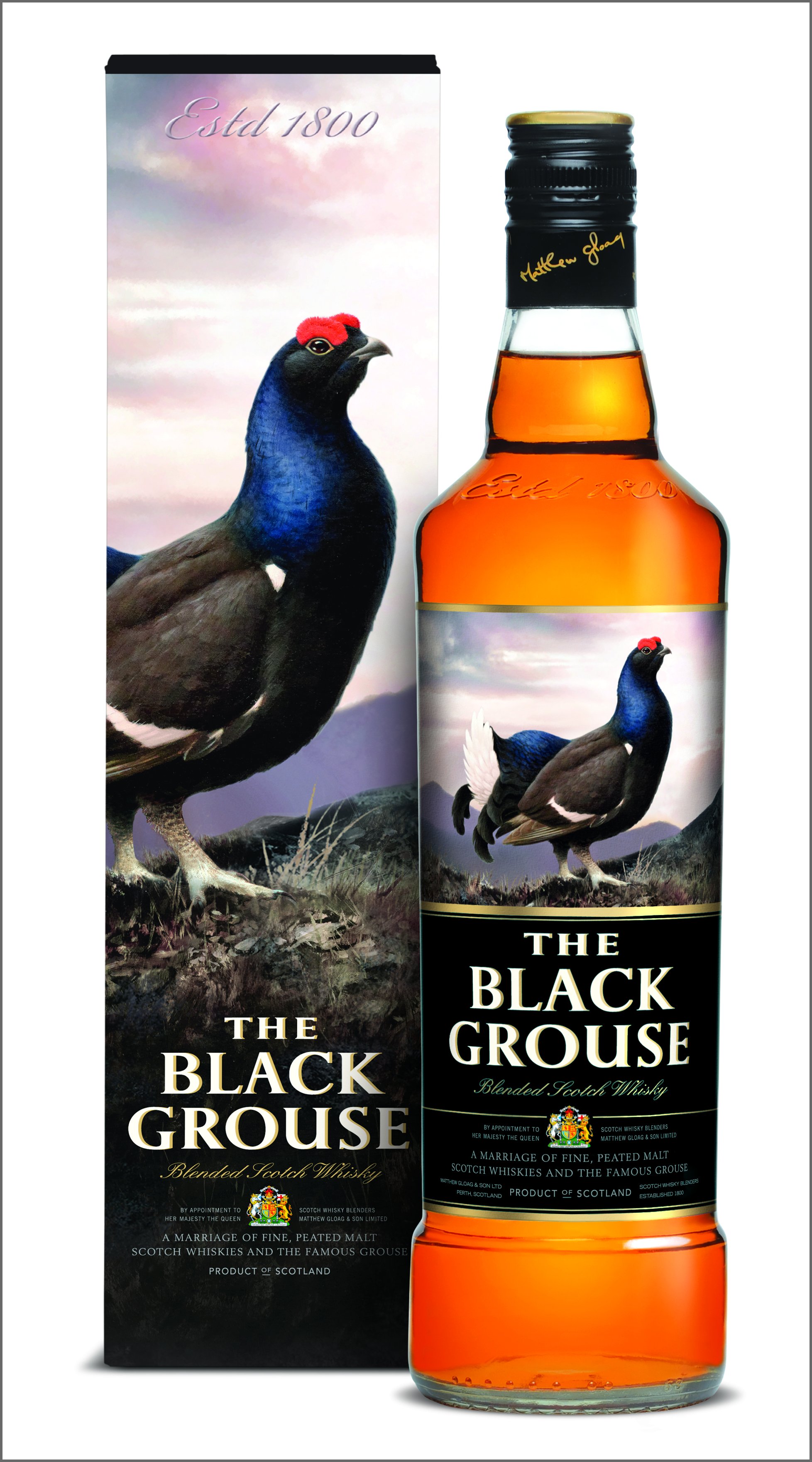
Whisky I've Drank: The Black Grouse


By Josh Peters
The Black Grouse is a peated version of The Famous Grouse. Being a blend they didn’t actually peat the barley specifically used for this whisky, like with a single malt, but instead have taken fully matured Islay whisky and blended it with some Famous Grouse. Originally created for the Swedish market, The Black Grouse was released in 2007.
There is some speculation about where the peated Islay whisky comes from with some folks thinking it’s Laphroaig, others thinking it’s Caol Ila and I even saw a post or two saying it was Ardbeg or Lagavulin. We can safely eliminate Ardbeg and Lagavulin from the mix due to how protective their owners are of these whiskies. For similar reasons it’s highly unlikely to be Laphroaig which leaves us with who I think it is. Diageo’s peated whisky work horse – Caol Ila. There’s no official documentation to support that claim, but with the state of the industry it seems to fit the best.
The Black Grouse Info:
Region: Scotland
Blender: Matthew Gloag & Sons
Age: NAS
ABV: 40%
Price: $30*
The Black Grouse Review
EYE
Caramel ice cream topper
NOSE
Noticeably more malt than the the regular Famous Grouse with notes of dark fruit, tropical fruit, grain, char, butterscotch and an acidic pop. Despite having Islay whisky blended in with it I’m not picking much up.
PALATE
Dried apricots, char and tropical fruit initially dominate the palate. Grain whisky – towing bourbon-like notes of caramel and vanilla – comes through followed by notes of malt, toasted grains and oily nuts with a bit of smoke.
FINISH
Medium fade of dark fruit, malt, caramel syrup and char.
BALANCE, BODY & FEEL
Decent balance, medium body and a round smooth texture.
OVERALL
The Black Grouse is a noticeable upgrade over the Famous Grouse with a richer character and offering up more in the way of aromas and flavors, but it’s muddled. Neither the aroma nor palate are crisp, but I still liked sipping on it nonetheless and it achieved the goal of any good blend which is cohesion; a unified experience that makes it an innocuous sipper and cocktail whisky.
So if you’re going to go with a Grouse I’d suggest making it a black one.
SCORE: 83/100

Saturday, March 26, 2016

Whisky I've Drank: Black & White


By SingleMalt Brasil 
Whisky Black & White.
Foi desenvolvido há mais de um século atrás por James Buchanan e se tornou um dos mais importantes representantes de scotch whisky no século XIX.
James criou um blend mais suave e leve que os outros scotchs do mercado, porém mantendo a mesma essência de consistência e sabor.
Apenas os mais finos maltes e grãos eram escolhidos para que se conseguisse o equilíbrio exato entre o blend único, composto por 35 maltes e grãos diferentes, que juntos fazem dele um whisky leve e suave.
Origem: Escócia
Categoria: Standard
Graduação: 40% vol.
Volume: 1000 ml.


By Jan van den Ende
Country: Scotland
Brand: Black & White
Bottled by James Buchanan & Co., Glasgow
Type: Blended Whisky
Age: NAS
Colour:
Pale Gold
Nose:
Medium Sweet, Oak, Biscuits, Rather Sharp Grain Alcohol, Vinegar, Touch of Peat.
Taste:
Rough and Tough. Grain Alcohol and some Sugared Dried Fruits. Bit of Oak and Pepper.
Finish:
Short. Sharp Grain Alcohol and a little Oak and Vanilla. Hint of Honey.
When adding a couple of drops of water you get rid of most of the Alcohol on the Nose and get more Grain, Straw and a little Malt. It completely waters down the Palate however and the Finish becomes even shorter with a Licorice note right at the end. So while water certainly benefits the Nose, it does not have a positive effect on Palate and Finish.
- Rating: 73
- Nose: 18 – Taste: 19.5 – Finish: 17 – Overall: 18.5
General Remarks:
James Buchanan created this Blend in 1884 and gave it its current name in 1904. It was originally sold in a Black Bottle with a White Label, hence the name. It contains 35 Grain – and Malt Whiskies with a 60-65% Grain Whisky content, a/o from Port Dundas and Cameronbridge. The main Malt component is produced by the Dalwhinnie Distillery(Highland). Above you see a picture of this Distillery.
The Blend is now owned by the Diageo Group. Main markets for this Blend are South Africa, Canada and Italy.
Drinking Experience Neat: Regular
Drinking Experience On The Rocks: Regular
Conclusion:
The rather young tasting Grain Whiskies dominate this Blend. There’s not much room for anything else. Some sweetness, Oak and hints of Peat and Honey. It’s certainly not expensive but it offers too little to consider buying it again.

Saturday, March 5, 2016

Whisky I've Drank: Jameson


By Clã do Whisky
A História do Jameson
JAMESON IRISH WHISKEY
Se você acha que o licor Bailey’s, a cerveja Guinness, o leite de excepcional qualidade, o trevo de quatro folhas, o duende e São Patrício (St. Patrick’s) são os símbolos mais fortes da Irlanda, acertou. Mas, não totalmente. Acrescente a essa célebre lista o uísque JAMESON, que por sua suavidade e uma fusão dos sabores baunilha, madeira de carvalho e mel, com um toque picante, de caramelo e avelã, agrada paladares tanto de homens como de mulheres no mundo inteiro.-
A história
Tudo começou em 1780 quando o escocês John Jameson adquiriu a pequena destilaria de Bow Street, localizada na cidade irlandesa de Dublin, e passou a fabricar seus próprios uísques seguindo o método irlandês de destilação. Sua preocupação em produzir um uísque de qualidade superior era tamanha que ele comprou os melhores equipamentos da época, só utilizava ingredientes selecionados (tradição que perdura até os dias de hoje) e selecionava pessoalmente a cevada e os barris de carvalho, não importando quanto custariam. Além disso, enquanto os uísques escoceses eram destilados duas vezes, ele em sua incessante busca pela qualidade máxima submetia o JAMESON Irish Whiskey a um processo de tripla destilação. O resultado de tanto cuidado era um uísque extremamente suave e saboroso, muito agradável ao paladar. Em 1810, seu filho, John II, expandiu a destilaria John Jameson & Son, que se tornou uma das maiores e mais importantes da Irlanda.
John Jameson faleceu em 1823 e seus descendentes deram continuidade ao lema criado por ele: “Sine Metu” (“Sem Medo”), frase presente no brasão estampado em cada rótulo da garrafa do uísque até os dias de hoje. Nos anos seguintes, seu outro filho, John III, tratou de expandir a marca JAMESON pelos mercados internacionais. O uísque JAMESON fez grande sucesso até começar a vigorar a Lei Seca nos Estados Unidos, mercado que pelo grande número de imigrantes irlandeses era um dos mais importantes para marca. Com a revogação da lei a marca voltou a crescer no mercado americano.
Nas décadas seguintes, seu sabor suave e harmonioso permitia uma variedade de combinações, desde drinques clássicos à inovadores, fazendo com que a popularidade e também a demanda pelo uísque crescesse no mundo inteiro. Uma dessas combinações, em virtude da versatilidade do uísque, foi a principal responsável por tornar o JAMESON tão popular: o irish coffee (café irlandês), fusão do café e do uísque irlandês coberto com uma camada de creme de leite fresco ou chantilly, que segundo a lenda surgiu em 1942, no bar do restaurante do aeroporto em Foynes, na Irlanda. Vivendo momentos atribulados na década de 60, a JAMESON uniu forças com suas rivais Cork Distillers e John Powers para formar o Irish Distillers Group em 1966.
A marca irlandesa foi adquirida pelo grupo francês Pernod Ricard em 1988, e nos anos seguintes ganhou força internacional, aumentando sua distribuição e investindo em campanhas publicitárias para se tornar uma marca global. O resultado: em 1995, as vendas do uísque irlandês chegaram aos 10 milhões de garrafas, ajudando à JAMESON a ingressar no seleto grupo das 100 marcas de bebidas alcoólicas mais valiosas do mundo. Em 2004 a JAMESON foi eleita como a marca de uísque de mais rápido crescimento no mundo, com suas vendas atingindo, em 2006, 2 milhões de caixas. Além disso, foi o uísque que mais cresceu no mercado americano na última década; e recentemente apresenta grande crescimento em mercados importantes do segmento como Rússia, África do Sul e França.
A marca organiza uma das maiores festas do mundo no dia de São Patrício (Saint Patrick’s Day), batizada de Jameson Global Party, acontece simultaneamente em 20 países, como Irlanda, África do Sul e Bulgária. Tudo isso com transmissão ao vivo pela Internet nas mais diferentes redes sociais. Além disso, patrocina o The Jameson Dublin International Film Festival, criado em 2003, e que já é considerado um evento internacional dos mais importantes no segmento, atraindo cinéfilos de todas as partes do mundo e vários artistas famosos. Nesse festival internacional de filmes, o cinema é visto como arte e recebe obras de vários países, apesar do foco ser os filmes irlandeses.
JAMESON, o mais famoso dos irlandeses
Dificilmente os irlandeses aceitarão, sem demonstrar uma ponta de ofensa, a insinuação de que o uísque escocês possa ser melhor. Se você pensa que o uísque nasceu na Escócia, está redondamente enganado. Na verdade ele surgiu na vizinha Irlanda. E as diferenças são grandes. Nem a grafia é igual: “whiskey”(para irlandeses) e “whisky” (para escoceses). Aliás, o termo é proveniente justamente de uma palavra irlandesa (“uiske beatha”) que significa em gaélico “água da vida”. Mas as diferenças vão muito além de uma simples letra. O uísque irlandês é destilado três vezes, enquanto grande parte da bebida escocesa passa duas vezes pelo processo. Outra característica marcante do irlandês: o uísque mistura dois tipos de cevada, sendo que um deles germina na água, preservando aroma e sabor leves. Rivalidades, diferenças e polêmicas à parte, o JAMESON é o uísque irlandês mais vendido do mundo e um dos mais populares do segmento. Atualmente a marca oferece uma ampla variedade de uísques:
● Jameson Original: É o carro-chefe da marca irlandesa, um uísque original envelhecido 8 anos e produzido desde 1780.