Sunday, December 24, 2017

Whisky I've Drank: The Singleton Of Glendullan Double Matured


By MasterOfMalts
A single malt from Singleton of Glendullan, originally released for the Travel Retail market. Their Double Matured expression is made with whiskies aged in both European and American oak casks, then married together in casks before being bottled.

By ScotchWhisky.com
NOSE
The fattest of this trio, but also the least immediately expressive. Reminiscent of apricot jam with some spice, and with water, some dark fruits. Solid.
PALATE
A sweet and thick opening with a little orange zest, touches of oxidised wine, currant and that sloe note once more. Touches of old wine cellar. Water makes things more slick. Quite a bulky feel overall. 
FINISH
Short and slightly bitter.
CONCLUSION
Matured separately in American and European oak, then married in ‘a special cask’. 
RIGHT PLACE, RIGHT TIME
Rootling around in the cellar for the bottle of last year’s sloe gin.

Sunday, December 3, 2017

Whisky I've Drank: Ole Smoky Moonshine Harley-Davidson Charred


By Thewhiskyexchange
Ole Smoky Harley Davidson Road House Customs Moonshine is the first release from the distillery that has been aged in wood. Matured in toasted ex-bourbon barrels for around three months, this is bottled at 51.5% – full bodied and rich style of white dog.
Superb served one part to two parts ginger beer.

By Ole Smoky
Ole Smoky® Tennessee Moonshine is now the official moonshine of Harley-Davidson! This multi-year partnership is punctuated by year-round events and limited edition co-branded Ole Smoky® Moonshine offerings. Both brands share common ideals of independence, adventure and a strong history of Americana, making the partnership a natural and exciting evolution.
Harley-Davidson and Ole Smoky have partnered up to release Harley-Davidson Road House Customs™ - Charred Moonshine®, available for limited time in select markets. Harley-Davidson Road House Customs™ - Charred Moonshine® pays homage to the bond amongst riders and their end of ride revelries at distant roadside destinations where bikes are parked and friends are gathered.
Stay tuned as more exciting things are on the horizon!

Sunday, November 19, 2017

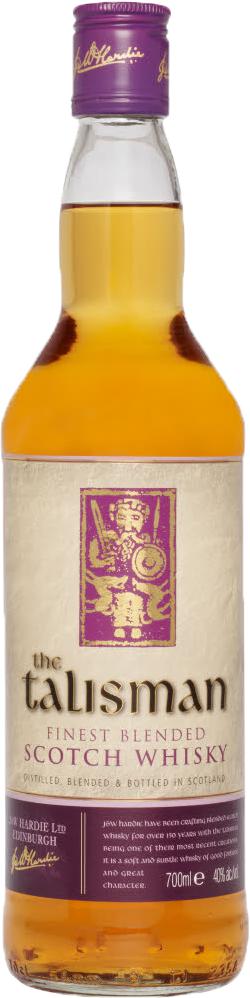
Whisky I've Drank: The Talisman


By Jan van den Ende
Country: Scotland
Brand: The Talisman
Type: Blended Scotch Whisky
Age: NAS
ABV: 40 % (My Guess: Around 5 Years)
Colour: Pale Amber/Straw
Nose: 
I'm going to be completely honest here at the risk of sounding like some spoiled snob which I ain't cause I still love my JW Black or Jim Beam Black on the Rocks. But after having tasted a couple of nice Single Malts lately it's not very rewarding to sniff at the Talisman Blend. Not because it's bad but because it simply lacks interesting aromas. It's very light with a bit of Malt, lots of Grain, some Oak, light Spice, Citrus and hints of Heather and Mango.
Palate: 
Thin Delivery. Sweet Grain, Caramel, Bitter Refill Wood, Lemon and hints of Heather, Peat and Honey.
Finish: 
Short and Sugary Sweet with a bit of Toffee, Pepper and Oak.
With a bit of Water the Nose becomes very thin but gains a bit more Fruit and Honey. Palate and Finish however disappear completely.
Rating: 72
Nose: 18.5 - Taste: 18 - Finish: 17.5 - Overall: 18
General Remarks:
The Talisman is produced by the Tomatin Distillery that was founded in 1897 and is located close to the A9 Motorway, halfway between Aviemore and Inverness. Over the years it grew very fast and today it is the second largest distillery in scale after Glenfiddich. It is owned by the Japanese Takara Shuzo and Okura Group. A large part of the production (80%) goes into blends like Talisman, Big T and the Antiquary. The Talisman contains around 20% of Malt Whisky and is quite affordable at around 20 US Dollars. Lately the distillery is making an effort to promote its Single Malts as well.
Drinking Experience Neat: Below Average
Drinking Experience on the Rocks: Below Average
Conclusion: 
There are better Blends at this price level. The Talisman is not interesting enough as a sipping Whisky and on the Rocks you can find better alternatives like the Famous Grouse, Cutty Sark, William Lawson's, JW Red and the cheaper Bourbons. If you want to mix, better use Bourbon!

Saturday, November 18, 2017

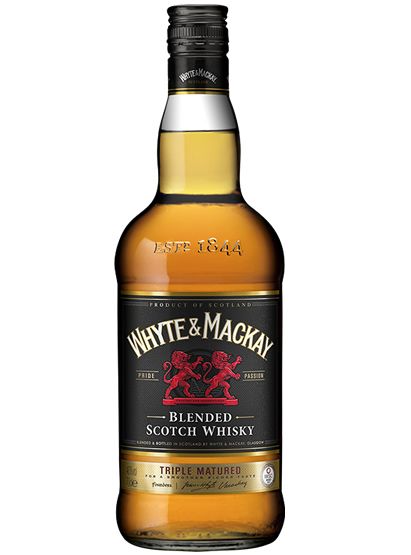
Whisky I've Drank: Whyte & Mackay Special


By Mark at MaltReview
We do like a good blended whisky here on Malt.
Cheap blends are often looked down-upon, particularly if you’re just starting to explore single malts, but they do provide the backbone of the whisky industry. And that’s why I like to cover them here, too. It’s all right reviewing whiskies worth hundreds and, on occasion, thousands of pounds, but that’s not much good for the majority of whisky drinkers. Particularly after Christmas, when everyone is scratching around for spare change in the sofa in order to make it to payday.
Of cheap blended Scotch, so far I’ve looked at Bell’s Original, Teacher’s Highland Cream, and the Famous Grouse. They were all very mild an inoffensive.
And now it’s time to look at another of the UK’s major blends –
Whyte & Mackay Blended Scotch Whisky.
Whyte & Mackay:
The company, Whyte & Mackay, has been around a long time. Since 1844. Based in Glasgow, its brands make up around 3% of the UK whisky market. It’s very sought after by corporations, too, and has changed owners quite a few times in recent years. Now it’s owned by a Philippines firm, Emperador, who bought it for a cool £430m. Whyte & Mackay is also the 26th largest blended Scotch brand worldwide.
Their master blender is Richard Paterson, who knows a thing or two about putting good whiskies together. He’s released some astonishing The Dalmore whiskies, and some – in my opinion – not so good Jura whiskies (I just can’t get excited about that spirit). They also own Fettercairn and Tamnavulin, as well as the gargantuan Invergordon single grain distillery.
The Whyte & Mackay Special Blend – the core of their range – is ‘triple matured’. First is the standard maturation of individual single malts. They’re then brought together and married in sherry casks, where they’re matured for a further few months. Then aged grain whiskies are added, where the new blend of whisky matures a little longer. In total, 41 different whiskies are used to make up the blend.
You can pick bottles of this up very cheaply indeed. Small bottles for less than £10 in many places, such as your local supermarket. Although rather bizarrely I won this in a raffle, so it didn’t cost me anything.
Tasting notes
Colour: 
deep copper. I think we can forgive blends for adding caramel colouring, largely for consistency, but interesting to note that it is darker than Bell’s or Famous Grouse.
On the nose: 
quite confident, creamy, vanilla custard, flashes of dried fruits. Malty. Like a bowl of porridge with a lot of heather honey stirred into it.
In the mouth: 
flavour! Quite a bit actually. Sweet: dried fruits, molasses or maple syrup. A little bit of woodiness in there too. Malted Milk biscuits. The burnt sugar crust on a crème brûlée There’s something very dark rum-like about it, too. Yes, it’s not complex, not even close, but there’s plenty going on. Compared to Bell’s or Famous Grouse, it’s far more flavoursome. And as with many blends, there’s good texture to the spirit.
I think because this last year I’ve become more a fan of sherried style whiskies than peated whiskies, this one ticks my box. If you’re not a fan of that sweetness then it may not be for you. I can imagine this going one of two ways. If you’re totally new to whisky, perhaps Bell’s – being more mellow and dialling down the flavours – might be the better bet. Whyte & Mackay just has far more flavour, and isn’t shy about it either.
Anyway, of the cheapest UK blended whiskies, I think this is the tastiest. Just don’t go expecting your knees to quiver and your spine to tingle when you take a sip.

Friday, November 17, 2017

Whisky I've Drank: The Macallan 12 Years Old Sherry Oak Casks


By Joshua St. John / August 21, 2016
Every so often, it pays to return to the basics. Few in the spirit world can even dream of attempting to offer a portfolio as deep and varied as The Macallan. As of March, 2016, four out of the the top ten most expensive whiskies to sell at auction were Macallans. At the time of this writing, The Macallan has swept the top five spots for most expensive bottles currently available via the website
wine-searcher.com, in addition to nabbing a total of nine of the top 25 spots on that list. 
So, why could such a prestigious label be considered one of the basics?
Releases from The Macallan commonly serve as a solid examples of several core attributes contained within a host of arguably more complicated Scotch whiskies. Malt notes are typically clear, and the impact of wood in the aging process is readily apparent.
This 12-year-old non-peated single malt from the Speyside region of Scotland sips cleanly while also featuring additional maturation in sherry casks. This is the source of the name for the line of Macallans to which this dram belongs; Sherry Oak. Bottled at 40% ABV for most markets and 43% ABV for the US, the whisky is at least seemingly designed to be approachable first and foremost.
Tasting Notes: The Macallan 12 year old:
Vital Stats: 
40% ABV (80 proof), 43% ABV (86 proof in the American release), 12 years old, 100% malted barley, available around $65 per 750 ml bottle
Appearance: 
Deep amber with strong legs.
Nose: 
Oaky and hot right off the pour. Loads of oak and perfume reads as somewhat bitter at first, with notes reminiscent of an amaretto sour and a hint of spiced plums. The nose softens dramatically after a few minutes, settling into dark sherry and plum sweetness.
Palate: 
Sweet and full, but not overly complex. Lots of sherry, plums, powdered sugar, cinnamon and nutmeg give it a silky, round mouthfeel. The finish is quick, with a mild burn and a long, lingering presence of sweetness reminding me of iced cinnamon rolls.
Conclusion:
The official website for The Macallan flatly states that this incarnation is meant to be enjoyed with friends. This is precisely where this single malt finds its highest value. The dramatic fashion in which the nose changes over a short period of time serves to teach newcomers patience when forming opinions on any whisky they may encounter in the future. The flavors are well-balanced, and the dry sherry notes are easily identifiable within the clean palate. This affords the opportunity for the sipper to become acquainted with those characteristics in a friendly environment before venturing into what are arguably more challenging sherried drams.
There is not an abundance of mystery in picking apart the 12-year offering from The Macallan. Going in with that understanding lends a great deal of versatility to the bottle which might otherwise go unnoticed in more deeply-stocked Scotch collections. This is a great example of an ambassador to the world of single malts by which you can possibly make converts of your more trepidatious friends. In terms of my own sipping,
I don’t find myself reaching for The Macallan 12 often, but I am rarely disappointed when I do. With a price around the $65 mark, the truest test of value will likely be how often you may be introducing others to Scotch whisky.
FINAL SCORE: 85/100

Thursday, November 16, 2017

Whisky I've Drank: Laphroaig QA Cask Double Matured


By Corinne Mossati
Laphroaig QA Cask has been around the travel retail market for some time but it is worth revisiting in light of the newer travel retail whisky additions.
Laphroaig QA Cask (QA stands for Quercus Alba, the latin name for American oak) is matured in ex-bourbon casks and then finished in new, uncharred American oak casks.
The whisky is bottled at 40% ABV, chill-filtered and bears no age statement.
The single malt is light amber in color, and on the nose, notes of vanilla, oak and some caramel are dominant. The peat is present but not as strong as other Laphroaig expressions. On the palate, light smoke, caramel and vanilla sweetness are on the entry then yield to hints of spice with black pepper notes. The finish is mellow, medium in length and doesn’t give hit the lingering salty and medicinal/iodine notes of Laphroaig 10 and Laphroaig Quarter Cask.
This is a softer Laphroaig with a sweeter and oaky character. It certainly lacks the punch and peat of Laphroaig PX Cask and Laphroaig An Cuan Mor. Die hard Laphroaig fans may find it a little underwhelming but it has its place for a newcomer wishing to try something a little different.

Wednesday, November 15, 2017

Whisky I've Drank: Monkey Shoulder


By TheScotchNoob
Despite the promise of the category, “blended malt whiskies” (the artist formerly known as “vatted malt” whiskies) have failed to take off as prophesied. Probably this is because the distinction (a blend involving several malt whiskies, but no grain whiskies, whereas a “blended scotch” like the ubiquitous Johnnie Walker contains several malt whiskies and one or more grain whiskies) is a little geeky for the average consumer. Compass Box has made a name for the category, although not all of CB’s whiskies are blended malts. Wemyss has done a niche business making middle- and high-end blended malts. Finally there is the stalwart of the category: William Grant & Sons’ own Monkey Shoulder.
I must admit that I’ve done my faithful readers and fellow value-seekers a disservice by taking this long to get around to mentioning Monkey Shoulder. At $25 – $30, if you haven’t tried Monkey Shoulder before you might as well stop reading here and go buy a bottle. It’s not the best whisky in the world, but such a solid whisky at such a great price deserves a spot on basically everybody’s home bar.
Monkey Shoulder is labelled “Batch 27″ as a reference to the original experimental batching of 27 casks. Now, runs of Monkey Shoulder are made 27 casks at a time, although the batches are not individually numbered. The vatting is a mix of William Grant & Sons’ three distilleries, all located in Dufftown, in Speyside: Glenfiddich, The Balvenie, and Kininvie. (Kininvie was built in 1990 on the grounds of The Balvenie and makes malt that is mostly used for blends.) All three are from “first-fill” ex-bourbon casks. Sometimes malts from other, undisclosed distilleries might be included in the vatting. The ages of the whiskies are unreleased, but you can basically assume they’re young.
For what it’s worth, “Monkey Shoulder” is the nickname for a shoulder injury experienced by maltsters after long hours of manually turning malt on a malting floor.
Nose: 
Crisp, clear malty grains, almost beery. A touch of lemon. No nose-tickle or heavy scents of oak, just lightly sweet and round. After a rest in the glass, there is a heavy layer of vanilla extract.
Palate: 
Initially a wave of lemon peel and caramel accompanied by slight tongue burn. This passes quickly, leaving nougat, mineral water (almost like tonic, with a touch of herbal-like quinine) and vanilla frosting.
Finish:
Short. Nougat all over, nutty and sweet, but quickly vanishing with a fading hint of dry oaky tannins and a bit of charcoal which leaves the mouth wishing for a little better balance.
With Water: 
A few drops of water amplify the citrus in the aroma which (when paired with the vanilla notes) remind me of lemon salt-water taffy. The palate has less burn, and tastes a little rounder – more “filled out”. I recommend a little water with this.
Overall: 
This is the kind of dram that you show to your friends who think “whisky” means something you add to Coke. Then you tell them it’s only $30. A gentle introduction to the world of malt whisky, with a very welcoming profile and a gentle effect on the palate, all with a nice array of grains and sweets that showcase what good middle-of-the-road ex-bourbon Scotch malt whisky is like. The finish could be better-balanced, and the aroma could use more lemony/fruity top notes, but that’s splitting hairs at this price. This also makes it a reliable staple for the “low end” section of your cabinet, something you can easily toss back on ice without guilt, or mull in a tulip glass after a meal. Or, hell, you could even make cocktails with it (a practice encouraged by the brand). A jack-of-all-trades, if you will, but master of none.
Monkey Shoulder
43% ABV
ScotchNoob™ Mark:
Price Range: $26 - $30