Sunday, August 25, 2013

Whisky I've Drank - Part Thirteen - Grant's The Family Reserve


By Master Of Malt
The nose is quite soft and light. There are notes of malted barley and toasted cereals with the requisite sweetness. The palate is of good body and quite sweet. There are notes of toffee and caramel with vanilla fudge and a touch of gentle, supple oak. The finish is of medium-length.
Grant's 'The Family Reserve' is a superb example of blending skill, and one of the most complex examples of the type I've ever tasted. My favourite blend is still Teacher's (that Ardmore malt... unbeatable!), but I'd say this wins over it in terms of sheer complexity. The nose is mouthwatering, sweet malts, dark fruit, then the palate really opens the throttle: more malt, rich fruit, hay, something almost vegetal-like, the malt and the grain standing out from each other, distinctive, the finish rolling all those flavours up and gently fading away. A masterpiece.

Saturday, August 24, 2013

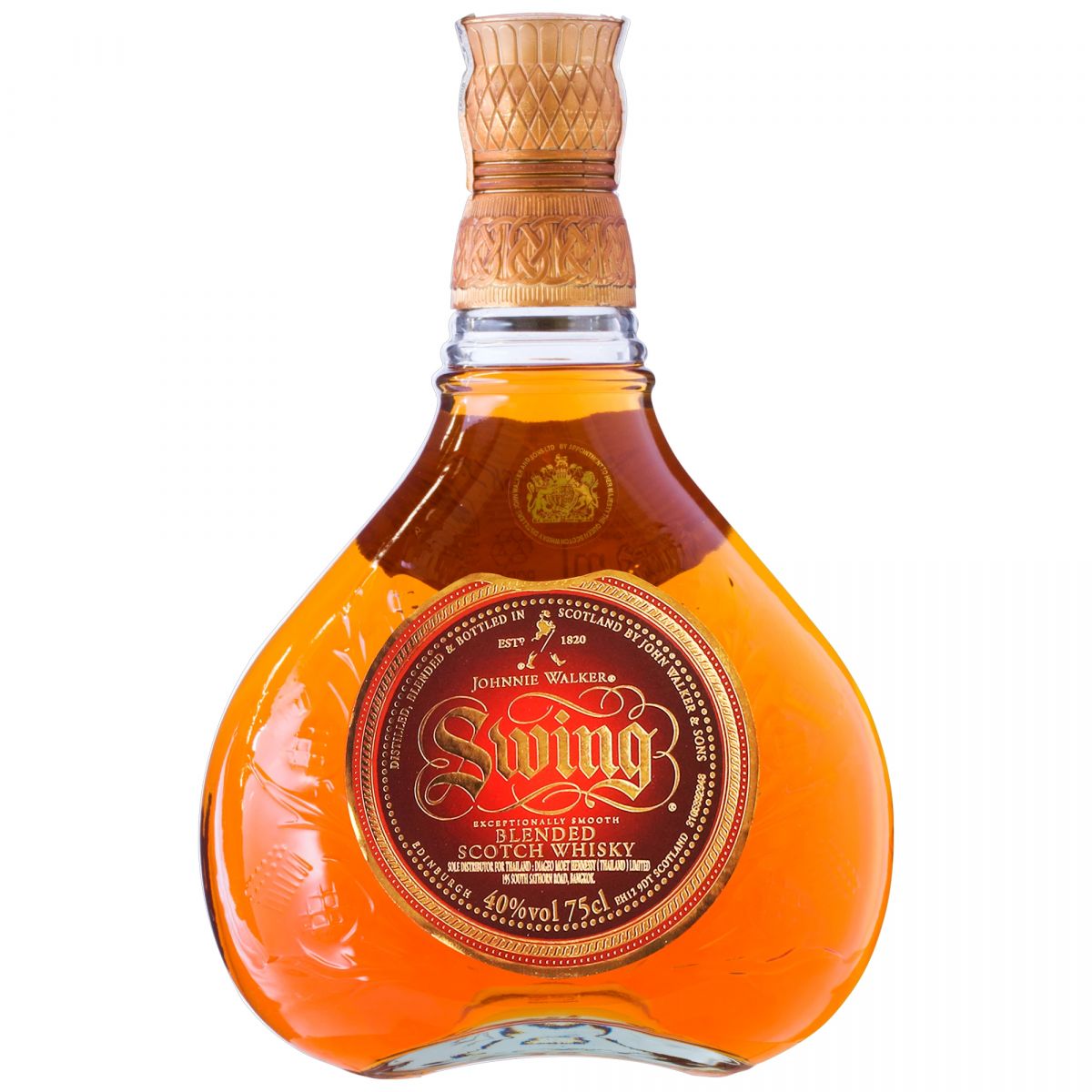
Whisky I've Drank - Part Twelve - Johnnie Walker's Swing


Tasting Notes by Michael Schout
This whisky comes in a cool bottle that is curved at the base so it has the ability to rock back and forth without tipping over. The name Swing is derived from this. I have never actually seen this whisky sold anywhere before, but my family has had a bottle for many years and because there isn't a review of it on Connosr, I think I'd write one while partaking in a dram.
Nose: 
Full of sherry and fruit sweetness. Nosing this whisky transports you to a warm spring day underneath a blossoming orange tree. There's a strong scent of orange blossom and dried apples and also a little hint of oak.
Palate: 
It's very light, fluid, and fruity. The sherry is subdued and more fruitiness comes out on the palate. I get the same fruit tastes as I smelled in the nose, but all are a bit more subdued. There's a faint smokiness. On first sip it seemed a little young and harsh, but I think that might have just been my mouth not being prepared because it was silky smooth for the second sip.
Finish: 
The finish is smoky and has a lot of oak. There is sherry just lingering in the back of your throat. It's a shorter finish and the spiciness that you have on the tip of your tongue once you swallow soon fades. It dries out the mouth a little.
Overall: 
I have no idea how old the scotches are that go into this blend but it is very smooth. It would be a very nice summer dram. It reminds me a lot of Johnnie Walker Green Label except instead of being earthy and malty, it's very light and fruity. I think that this is an exceptional blended whisky.

Saturday, June 29, 2013

Whisky I've Drank - Part Eleven - CRAGGANMORE 12 YEARS OLD SINGLE MALT


TheScotchNoob 
Cragganmore. I had seen the bottle on the shelf at various whisky shops, and vaguely knew that it was part of Diageo’s main Classic Malts series, representing Speyside. I had never tried it or even heard it talked about. Why would Diageo pick, out of the hundreds of prolific and historic sites in the heart of mainland whiskymaking – Speyside – Cragganmore to represent the region? Luckily I got a chance to try the three main distillery bottlings of Cragganmore at a K&L Whisky Tasting recently. Whisky Tastings are such an important way to try new whiskies and expand one’s horizons. I wish they were more prevalent in the U.S.
Cragganmore is also the principal malt used in Diageo’s wildly popular blend Johnnie Walker Black Label, providing the gentle malt base. The distillery-released 12 year-old comes exclusively from 2nd-fill bourbon casks, to reduce the woodiness imparted by long aging in first-fill barrels. At $44 a bottle, this isn’t a bad deal and is worth considering against similar ex-bourbon-cask malts like Glenfiddich 15-year, Glenmorangie 10-year, and Oban 14-year.
Nose: Pale hay – indeed it smells like Johnnie Walker Black Label! (Imagine that). Very light… a bit of ground peanuts?
Palate: Hazelnut and milk chocolate. Peanut butter, lavender, floral honey.
Finish: Sweet processed honey. Nice oak tannins, small bitter note. Trails off with hazelnut skins.
Overall: Mild and inoffensive. No smoke, no fruit, just a soft cereal character and light accents of florals and nuts. Somewhat meaty, although the flavor profile is mostly balanced around the nuts. Certainly worth the money, and a contender for the “midrange Speyside” spot in your cabinet – especially if you like nuttier flavors instead of Speyside’s more-common honey, apple, and heather style. I do wish Diageo would bottle this at 43% and without chill-filtration. The added body would really complement the nuttiness.

Whisky I've Drank - Part Nine - BALLANTINE'S 17 YEARS OLD


By TheScotchNoob  
Jim Murray caused a bit of an uproar when he named Ballantine’s 17 year blended scotch whisky World Whisky of the Year in his 2011 Whisky Bible. In 2010, it had climbed nearly as far – winning best blended scotch of the year. The thought of a blended scotch trumping over all single malts sent many whisky nuts (this one included) into paroxysms of rage. I had to try it.
A caveat: I’ve since read that Jim was tasting a newer bottling of Ballantine’s 17 – the slightly updated bottle in a blue box and the number ’17′ in larger font on the label. Since my tasting sample was a 30ml Master of Malt vial, I have no clue whether it came from the blue-box or red-box Ballantine’s.
Like many blends that were born in grocery stores, Ballantine’s originated as a series of blends sold by a grocer named George Ballantine in 1827. It uses 50 malts, but focuses on four key ‘flavor’ malts: Scapa, Glenburgie, Miltonduff, and Glentauchers. Of those, I’ve only tried Scapa before.
Nose: Honey and honeysuckle. The honey here is refined, not raw or honeycomb-like. Very floral. Vanilla. Faint hint of woodsmoke. Sweet apple cider. Buttercream frosting. Reminds me a lot of Oban 14.
Palate: Vanilla bean up front. Milky texture – not quite creamy. Elegant malt, with pure cereal flavors. Becomes tangy near the end – lemon custard.
Finish: More honey on the finish. A touch of wood. No bitterness to speak of. Medium-long. Echoes of honey and buttercream frosting.
With Water: Water releases a puff of cinnamon, a whiff of licorice, and something herbal that might be peat. It doesn’t hurt the body too much but it roughens up the finish, making the dram taste younger than it is. Skip the water here.
Overall: What’s most impressive here is the concentration of sweet desserty flavors without even a touch of bitterness on the finish. I guess that’s what you’re paying for. I could have used a little more nuttiness somewhere to round out the flavors. There is nothing here to indicate the presence of “low brow” grain whisky. After 17 years, it has definitely smoothed out. It adds the body and likely some of the cereal flavors, although the lack of full creaminess in the body texture makes me wonder if the grain whisky percentage in the blend is low. The overall impression is light and sweet, without any eclectic or surprising flavors to distract the palate. Surely, it’s very very good whisky… but I wouldn’t call it exciting.
I’m not sold. Sure, it’s good whisky, but I’d rather spend the money on some malts that are at least as good (quality-wise), even if they aren’t as masterfully assembled. It’s like buying one piece of art from a popular artist instead of four pieces from equally-good, but less-known artists for the same money. Will you enjoy the popular painting (and its inherent value) more? Probably, but you can cover more wall space with the four also-rans. Maybe that’s a tortured metaphor, but it works for me. If the above sounds interesting, but you don’t want to drop the $90, spend the money instead on a bottle of Oban 14, which is packed with honey flavors, and a bottle of Great King Street which is almost as good for half the price.

Sunday, June 23, 2013

Whisky I've Drank - Part Eight - JOHNNIE WALKER BLUE LABEL


By Lance Mayhew at Cocktails.com
Johnnie Walker is one of the most famous brands in the world of blended Scotch whiskies. Each marque has its own color designation, from red, to black, to green and then gold. At the pinnacle of the Johnnie Walker line is the exceptionally well regarded Blue Label blended Scotch whisky. Each bottle of Johnnie Walker Blue Label comes in its own silk-lined box, with a certificate of authenticity and a unique serial number on each bottle. Luxury, exclusivity and quality are implied by the presentation, and the contents of this bottle do not disappoint.
Nose
On the nose, Johnnie Walker Blue Label offers up nosegay of floral notes, dried lavender, roses and rununculas predominate. Notes of leather, raisin, lemon peel, Seville orange and pipe tobacco emerge with time.
Body and Palate
Johnnie Walker Blue Label is a rich, full bodied and mouth-coating whisky. Dried plum, tobacco, cedar wood shingles and hints of toffee are at the forefront of this whisky. As it caresses the palate, orange marmalade, rose petal and brown sugar flavors peek out from behind a curtain of soft smoke.
Finish
On the finish, Johnnie Walker Blue Label delivers what every super-premium Scotch whisky should, complexity and elegance intertwined. Big smoke notes emerge to clear the earlier fruit notes off of the palate with more cedar and tea spice notes at the end. This is a long, lingering finish that true whisky enthusiasts will find immensely satisfying.
Johnnie Walker Blue Label is an expensive whisky. It is a special occasion whisky that delivers exactly what one would expect from a whisky of this caliber and price tag; a memorable experience. Johnnie Walker Blue Label is one of the greatest blended Scotch whiskies in the world and comes highly recommended.

Whisky I've Drank - Part Seven - ROYAL SALUTE 21 Years Old


By Greatdrams

Chivas Regal are not ones to shy away from an opportunity to make great looking bottles. In the past they have collaborated with famous names in the fashion industry, including Tim Little and the legendary Vivienne Westwood.
And the Royal Salute 21 is just one of many phenomenal designs they have released.
They recently updated their bottle, adding to the majesty that they had already succeeded in capturing.
Royal Salute 21 comes in three different colours, Ruby, Sapphire and Emerald, a homage to the three stones found in the Crown Jewels.
The drink itself was created to commemorate the 1953 coronation of Queen Elizabeth II, and what better way to that than with these amazing bottles.
With a slight bulge in the neck, reminiscent of typical whisky bottles, this is a play on the normal Chivas Regal but with an elegant twist.
The colours really add to the bottle and alongside the mighty lion and smoke filled canons that now replace the King and stead, they live up to the Regal name.
These are the perfect additions to your own Whisky version of the Crown Jewels and even come with a matching velvet pouch to really give it that extra bit of panache.
Chivas Regal do not disappoint with their design offerings, and manage to match the quality of container with the quality of drink.
Crack open a bottle sometime before the next coronation and you’ll be met with a wonderful nose full of nuts and fruit, with a slight hint of bitter dark chocolate and caramel.
The nutty tang intertwines with ripe, juicy fruits. It sounds like a Cadbury’s Fruit & Nut Bar, but please rest assured, it is so much more.
The flavours are deep and interesting, and remember, this is only the beginning.
Once you indulge and actually take a drink of the Royal Salute 21, you will be met with a rich and creamy mouth feel that will have you begging for more.
The flavour profile develops and the fruit and nuts in the nose are given real depth. This dram definitely lives up to the bottle it is held in.
There is a sherried sweetness, full of apples and raisins, with candied citrus peels in the background. The oak of the barrels also comes through, with a slight wooded tang and adds a freshness to the sugary sweet overtones.
Hazelnuts and pralines dipped in dark chocolate give a slight bittersweet quality to the dram. This ties in perfectly with the rich fruits and the orange and clementines that begin to show themselves.
To wrap it all up, we have an amazing finish. The flavours tie together and are surrounded by an overall oakiness that captures the liquid in its maturation. The finish is long and dry, the perfect end to a fantastic dram.
The luxury of the bottle is made into liquid form and comes out as this dram. Chivas manage to pull off what many cannot, with a great aesthetic appearance and a stupendous Whisky to give it substance.
This is a dram for collectors and for those who just want a bit of luxury in their Whisky cabinets. Don’t wait until the next coronation (because as Charles knows, you’ll be waiting a while) and go out and get your own Royal Salute 21 now!

Whisky I've Drank - Part Six - JOHNNIE WALKER BLACK LABEL AGED 12 YEARS


By TheScotchNoob

I’ve always (since I began drinking scotch) had a lively lack of respect for the Johnnie Walker line of blended scotch from Diageo. It represents to me the wrong end of the spectrum between artisanal, hand-crafted, small-batch spirits and factory mass-produced, lowest-bidder, penny-squeezing corporate swill. I personally don’t believe that quality and greed can coexist in the same producer, whether that producer is making whisky, wine, cheese, or furniture. Diageo has publicly stated that since most of its significant global revenue comes from blended whisky like Johnnie Walker, it would happily close down its high-cost, low-margin single malt bottlings and focus entirely on dumping vats of malt into vats of grain for blends, if it could. That does not sound (to me) like a company interested in providing a high-quality product to a discerning consumer.
That said, this blog is meant for evaluating the taste (not just the politics) of whisky, so I thought it high time I give a thoughtful look at the quintessential Johnnie Walker whisky: the Black Label. This is a standard blend of some unknown percentage of malt and grain whiskies, all at least 12 years old, and represents something like 130 million liters of annual sales (that’s an old figure from 2005 and includes all Johnnie Walker blends – this info is surprisingly hard to find online). Suffice it to say they make a LOT of the stuff, and it sells at a fantastic rate worldwide. The component malts of Johnnie Walker are (along with 36 other malts and grains, at varying percentages): Cardhu, Talisker, and Lagavulin. Doubtless, a little bit of every Diageo-owned malt (except Oban) is included. It’s a safe bet that the majority of the malt here is Cardhu 12-year, although some marketing material claims that “the heart” is Talisker. After tasting it, I doubt that.
I don’t usually remark on color, but I noticed that JW Black has an unnatural red-gold color. It is most certainly heavily colored with caramel coloring.
Nose:
A light Highland peachiness (Dalwhinnie?). Pretty floral. Light and inoffensive. Totally unable to detect any peat. Deeper in, round and mildly buttery. Nary a hint of paint thinner!
Palate: 
Medium-bodied. Mild tongue burn – I guess that would be called ‘smooth’. Vanilla cake bread crumbs, a slight hint of smouldering match head, and a few seconds later, an acidic wave of vodka-esque off notes.
Finish: 
Slightly acrid, like a smear of coal tar on top of a buttered scone. Fading out with some almond paste, and only a little bitter woodiness. On the short side.
With Water: 
Elevated florals, and a hint of peach pit on the nose. Shortbread and crumb cake on the slightly thinner palate. A nice woody marshmallow and some caramel on the finish. This is quite improved by the addition of a splash of water.
Overall: 
Ok, fine, it’s really not that bad. It has some nice floral elements in the nose, a straightforward flavor, and not too much bitterness on the finish. That said, it has two major downsides: First, it was clearly blended to be bland and uninteresting (the industry euphemism is ‘consistent’). There might be peated malt in here, but it’s so diluted that it just comes across like a fine layer of stale ash. The florals would be interesting if they weren’t overpowered by a wash of cereally grain. Second, the grain component is obvious, and not harmoniously integrated with the malts. It provides some nice heft and body on the palate, and a bit of creaminess, but its relative youth – although 12 isn’t too bad – and lack of quality can be tasted in the vodka notes on the tongue. Frankly, it would be hard for this not to taste mass-produced.
For $30, you could certainly do worse, but I feel that for a little more money, one could enjoy a wide variety of single-malts that shine in their own ways, rather than continuously pour cash into the Diageo blend machine and be satisfied with a muddy, uninteresting jumble of substandard malt barrels and bottom-dollar grain. (That’s hyperbole, the bottom-dollar grain goes in the Red Label). Here’s an idea: buy a bottle of Dalwhinnie 15 or Cardhu 12 for the florals, a bottle of Cragganmore 12 for the malty sweetness, and a bottle of Caol Ila 12 for the punch of smoke, and blend yourself a personalized (and far superior) Black Label blended malt.