Saturday, October 7, 2017

Whisky I've Drank: Glenkinchie 12 Years Old

By The ScotchNoob
I think of Glenkinchie, one of the few remaining Lowland single malts, as “the lemon malt”, although its actual nickname is “The Edinburgh Malt” for its location some 15 miles from the capital of Scotland. Glenkinchie was relatively obscure (used mostly in blends) before it became one of the jewels in Diageo’s Classic Malts crown, representing the Lowlands. The standard 10 year-old expression was recently replaced by this 12 year-old. The only other official bottling is a Distiller’s Edition finished in Amontillado sherry casks.
Nose: 
Slightly smoky (earthy peat, but mild). Dirty honey, malty grains, but not particularly sweet. If I really dig into the glass, some lemon oil.
Palate: 
Thin body. Grain-forward with complex sooty smoke. Lemon hard candies.
Finish: 
Lemon (Pledge?). Slightly bitter; charcoal.
With Water: 
A few drops of water release a lot of bright, tangy lemon on the nose and palate. I recommend a few drops of water with this one.
Overall: 
Nothing outright bad, but all of the tasty-sounding lemons and honey and smoky malt all come across as sooty, bitter, or stale. Water does help, with a boost in the tart lemon/lemonade character, which provides better balance and more dynamism. Still, this isn’t something that everyone will be happy with after a blind purchase. If this were competing at entry-level tier of $30 to $40, it would be a solid choice. Instead, at regularly more than $50, it’s hard to recommend.

About The Distillery Glenkinchie, called “The Edinburgh Malt” for its proximity to that city, uses Oregon Pine washbacks and hard water, which previously flowed from the Kinchie burn. Now the water comes from Hopes Reservoir which is fed from springs in the Lammermuir hills. One of the few remaining Lowland distilleries, Glenkinchie represents the Lowlands in Diageo’s Classic Malts series.
Glenkinchie (12 year)
43% ABV

Sunday, October 1, 2017

Whisky I've Drank: Glenmorangie Aged 18 Years


By Joshua St. John
Certain whiskies seem to imply their palates in their own names. Glenmorangie certainly evokes specific flavor memories for me, though that may be informed largely by experience. In any case, when I encounter a dram from this Highland distiller I tend to expect clean, crisp, fruity flavors. Just the sound of the name on the tongue gives me images of fresh, ripe oranges and honey.
The Glenmorangie 18-Year-Oldexpression marks entry into what Glenmorangie terms their Prestige Range. As the name would imply, releases in this category are a step above the Core Range in terms of age and pricing. While the Core Range focuses on 10- and 12-year-old single malts, the Prestige Range opens with an 18- and continues up to a 25-year-old bottling. Additionally, non-age statement Signet and extra-aged releases distilled in 1981 (Pride 1981) and 1978 (Pride 1978) round out the category.
For Glenmorangie 18-Year-Old single malt, the distillers set aside their signature dram for 15 years in American white oak casks. After this point, approximately 30% of the whisky intended for the finished product is separated out to spend the last three years maturing in Spanish Oloroso casks, while the remainder stays in American white oak. Once a total age of 18 years for all the whiskies involved has been achieved, the isolated parts are reunited and bottled at 43% alcohol by volume (86 proof).
It should also be noted that the presentation of this whisky is intended to make a certain impression. The box housing the bottle is large and sturdy. This theme is carried forward to the bottle itself. I find Glenmorangie’s shapely bottles to be attractive in general, and this one is a superb example of the aesthetic. The glass is far more substantial than what is used in bottles for the Core Range, particularly in the base. I swear you could just about pound a nail into a 2×4 with this thing. (Note: do not attempt to use this or any other whisky bottle as a carpentry tool.) The stopper capping it all off is nice and heavy. The entire package just communicates quality. Absolute top marks for presentation in this regard.
Tasting Notes: Glenmorangie 18 Year Old:
Vital Stats: 
43% ABV (86 proof), aged 18 years, 100% malted barley, available around $95-$116 per 750 ml bottle.
Appearance: 
Deep amber with strong legs.
Nose: 
Sweet and subtle. Not significant alcohol burn on the nose. Cinnamon, apricot, shortbread cookies.
Palate: 
Apricot from the nose transitions into the palate very nicely. Round, full, and silky mouthfeel. Rainier cherries, Lemonhead candies, light amount of malty cereal grain, chocolate-covered raisins, hint of oak. Continued apricot notes through the finish with a flash of cinnamon. Easy and light burn, though makes its presence felt. Balances well with the subtle qualities of the nose and palate.
Final Thoughts:
The 18-year-old single malt category can be a crowded one. This seems to be a nearly universally agreed-upon age to be considered somewhat prestigious, and thus many distillers charge a hefty sum to acquire their more mature spirits. Read: some whiskies are overpriced simply because they are old, regardless of quality.
The price point for Glenmorangie 18-Year-Old places it more in the company of Glenfidich 18 or Johnnie Walker Platinum than, say, The Macallan 18. In terms of quality, however, I would argue that Glenmorangie is more on par with the latter of the three. I am even tempted to suggest that Glenmorangie 18-Year-Old deserves a seat at the table with The Macallan 18-Year-Old and Johnnie Walker Blue Label when it comes to discussing somewhat approachable luxury whiskies. Simply put, this is a fantastic whisky available at what has become a steal of a price.
Score: 93/100. 

Saturday, September 16, 2017

Whisky I've Drank: Wild Turkey 101 Proof


By Derek Sun

Editor’s Note: This whiskey was provided to us as a free sample to review by the party behind it. The Whiskey Wash, while appreciative of this, did keep full independent editorial control over this article.

Featured in countless movies, TV shows, and books, Wild Turkey is an institution among whiskey drinkers. The turkey logo, intricately detailed bottles and lengthy history have created a memorable image and have attracted many fans to the bourbon. Based in Lawrenceburg, Kentucky, the Wild Turkey brand has been operating since 1940.
Although a popular stereotype insists that Wild Turkey crafts a product that is more renowned for its low price rather than its high quality, Wild Turkey 101 does a good job of countering that fallacy. It has a distinctively spicy and exciting flavor, and contains an impressive range of tastes.
Named for its proof, Wild Turkey 101 approximates the color of dark amber, with a strong woody scent mixed in with caramel, toffee and cinnamon.
As soon as the bourbon contacts the palate, the redoubtable spicy tang is the first noticeable quality. It arrives hot and sharp, a consequence of mixing bourbon aged for an average of eight years. All the time spent aging has paid off in the form of the rich color and vibrant taste. The bourbon spice melds with cinnamon, nutmeg and vanilla. The mixture of corn, rye, and barley malt comes together to offer a wealth of flavors. What is less obvious later, however, is the current of wood flavor extracted from the oak barrels used to age the bourbon. Drinkers wishing to have more of the oak taste can release it by adding some water to the whiskey.
For those who dislike a lot of sharpness in their drinks, Wild Turkey may not be an ideal choice. However, most people will get used to and gradually enjoy the tanginess. There is a slight burn in the mouthfeel, but the overall impression is still relatively smooth. The taste lingers for a while after drinking, which is a good sign.
People who are skeptical of Wild Turkey’s ability to make good bourbon would do well to try this one out. At 101 proof, it packs something of a punch, and has more taste and vigor than a number of other whiskies. The price of one bottle ranges in the $20s, making it an affordable choice. It is very reasonable for a decent whiskey. For too long, many people have dismissed this brand as cheap and inferior. Checking out Wild Turkey 101 should help remedy that mistaken belief.
Overall I give this whiskey a rating of 85.

Sunday, August 27, 2017

Whisky I've Drank: Compass Box Delilah's American Oak Aged Blended Scotch Whisky


By Tim F
So today we have three new Compass Box goodies to have a go at, which is great because, remarkably, this week marks the fifth year since The Whisky Exchange Whisky Blog (snappy title) first slithered onto your screens. Yes! Five years already!! Egad and Holy Crapola.
Yo, I’m back! Just because it’s the anniversary.
But no, in all actuality, it’s really five years and two days since I put up the obligatory ‘Hello world’ cringeworthy intro blog post that was required of all blogs at the time. The first proper post, which I’m still rather proud of as my first t’interweb essay, was the following day, when I dissected La Martiniquaise’s acquisition of Glen Moray in typically over-written fashion (start as you mean to go on, I say).
Obligatory reference to other stuff that happened on September 18th 2008: Er, sod all. Just some financial crisis stuff and Keeley Hazell’s birthday. Thanks for nothing, Wikipedia.
Anyway let’s crack on, time is short when you’re having fun (that’s right, isn’t it?). As I mentioned, we have some nice Compass Box goodies to have a go at. They include Delilah’s, a new blend created specifically to go with beer (presumably they couldn’t go with Boilermaker as someone else has already got there); and a pair of ‘experimental’ (it says here) blends, one of which will go on to be a permanent addition to the Great King Street range.
Delilah’s, then. Cool label, check. American oak, check. It really couldn’t be anything other than a Compass Box whisky. The story here is that Compass Box have created a new blend for a trendy nitespot of the same name‘s 20th anniversary and, presumably, they got their measurements wrong like in Spinal Tap’s Stonhenge (but the other way round) and ended up with far too much (I’m totally making this up, by the way, that’s definitely not what happened).
Anyway, it’s not confined solely to Delilah’s bar, which is a relief as that’s in Chicago (apparently they’re into their punk there) and otherwise we wouldn’t be able to sell it to you and this whole blog would be a complete and utter waste of your time. Eh? Oh.
Delilah’s is quite limited though – only 1200 bottles have made it intact from the US for the whole of everywhere else, so it’ll probably run out pretty quick. It’s bottled at 40%, which is pretty low for Compass Box, but that’s because Delilah’s is intended to be an easy-drinking sipper appealing to a broad range of folk. Incidentally, the bar itself was referred to as the most important bar in America by none other than Michael Jackson (the good one) and has won the title of the USA’s Best Whisky Bar on numerous occasions, so if you’re ever in Chicago it’s probably a good idea to go there.
“Mike[owner of Delilah’s] wanted a Scotch whisky that, in his words, ‘thinks it’s a Bourbon,’ so we sourced some single malts aged in new American oak hogsheads, something that’s very hard to find in Scotland. The result is a Scotch with a big, luscious vanilla-oak character that has echoes of Bourbon flavo[u]r. This makes it dangerously easy to drink neat and perfect served as a shot with a beer—the way a lot of whisky is enjoyed at Delilah’s!”- John Glaser”
Yes, that’s right – new American oak. Which could be said to be in vogue these days. For ye nerds, here’s the patented Compass Box coy cask lowdown: “Single malts from the towns of Alness and Longmorn (approx 50% of the recipe); single grain whisky from Fife (approx 50% of the recipe).”
COMPASS BOX DELILAH’S:
Nose: 
Very clean and fresh, with green apple and some lemon and grapefruit juice. Then restrained vanilla oak, with hot-buttered toast, roasted oats and coconut shell. A hint of spongecake develops.
Palate: 
 Follows on perfectly, with Compass Box’s trademark precision. Shows apples, vanilla, cream soda and some mildly sappy oak. Impressively hefty for 40%, bottling at 40% is by no means a disservice to this whisky. Characterful.
Finish: 
Very good length, drying.
Comment: 
Of course, it doesn’t taste like a bourbon, it’s not nearly sweet enough. But there’s no doubting it’s from American oak. In the interests of thoroughness, tenacity and self-sacrifice that TWE Blog has never really become a byword for, I also tried it on either side of a slug of light beer. I couldn’t bring myself to drink Budweiser, so I settled for a Reinheitsgebot German lager. They went together like toast and beans.
Delilah’s is a very pleasing whisky with attitude aplenty without taking itself too seriously and it goes down a treat.
The literature I have received explains that both of these blends have been bottled at 43%. The orange one is lightly sherried, while the blue one is a bit peaty. The orange one (00-V4) is “28% Lowland grain whisky, 72% Malt whisky from the regions of Speyside, the Highlands and islands and with a small percentage of peated malt from Islay. Mostly first-fill Sherry casks and refill ex-Bourbon barrels.”
The blue one, meanwhile, (TR-06, keep up), is “33% Lowland grain whisky, 67% Malt whisky from the regions of Islay, the Highlands and Speyside. A third of the recipe is from fruity single malt from the village of Brora. Mostly first-fill ex-bourbon casks and new French oak finish for additional complexity.”

Saturday, August 26, 2017

Whisky I've Drank: Kavalan Solist Ex-Bourbon Cask


By @mystycreek
Cask no. B090916030A / Bottle no. 127/195 / ABV: 57.1%
Thanks to my brother, he purchased this bottle in a local market's clearance sale, and kindly left it to me. This bottle has been opened for about a month.
Nose: 
Hot and fruity. Coconuts, mango, honey, lemongrass and citrus.
Palate: 
Sweet and spicy, a bit harsh. Milk chocolate, vanilla, cinnamon, ginger, pineapple, honey and lemon candy.
Finish: 
Coffee bean, white pepper, vanilla and oak.
Balance: 
Full flavored, obviously young and hot. There's a lot of tropical fruits and spices, the oak is dominating, not bad but too many edges for my liking.
Overall: 
It's a solid single cask, but a bit expensive for this young whisky and what it delivers, in my opinion Kavalan Solist Sherry Cask is more rounded the enjoyable. If you want a special Taiwanese bourbon cask whisky, TTL(Taiwan Tabacco & Liquor Corperation) Nantou Distillery Bourbon Cask Cask Strength is a delicious treat that worth seeking out, but it's only available in Taiwan now.

Saturday, August 12, 2017

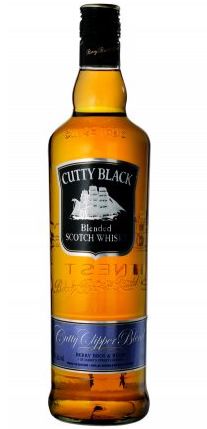
Whisky I've Drank: Cutty Black


By Kevin McComber
I'm sitting in the open air on a balcony overlooking the beach at Isla Verde in San Juan, Puerto Rico. I bought this bottle of Cutty Black at the supermarket yesterday for $24, as I had never heard of it before (only the regular Cutty Sark, which is all over the mainland U.S.) but read online that it was supposed to be a peated version of the regular Cutty. I figured that, for this price, it was worth a try.
Cutty Sark is owned by Berry Brothers and Rudd and, though Cutty Sark is a popular brand with worldwide distribution, Cutty Black is not available in the continental United States.
Cutty Black, 40% ABV
Blended Scotch whisky
Appearance: Gold.
Nose: 
Brown sugar, raisins, tart plums, honey, dried apricots. A symphony of dark fruit and sugar-related scents, plus a hint of light wood.
Palate: 
Rock crystal sugar candy, apricots, very ripe red apples, and butterscotch. So smooth I almost didn't know it was in my mouth yet. Reminds me a bit of the Bunnahabhain 18 and Highland Park 12/18 (without the peat).
Finish: Some salt with lingering mellow and well-balanced sweetness.
Overall (of 100): 94. 
Damn. I think this is the best value whisky I have ever tried. Though it doesn't really come through with any peat for me, that's fine - there are a lot of great fruit and sugary notes that, even though I tend not to like the really sweet whiskies, do not seem cloying. This whisky just begs to be drunk all night. I believe I will have to oblige.

Whisky I've Drank: Lauder's Aged 12 Years


By MasterOfMalt
Presented in a four sided dimple bottle, a smooth blend established in 1834. Lauder's 12 is a very rounded, sweet blend.
The nose is light and smooth. There are some lovely barley notes with a touch of oak and spice, a little cereal sweetness and a hint of smoke. The palate is of medium-body and quite well-balanced. There are notes of barley and toffee, a hint of cream and mixed peels. The finish is quite long with increasing dryness.
MacDuff International
By Lauder's
LAUDER’S 12 YEAR OLD retains the smooth, roundness of the Original blend. Lauder’s 12 Year Old gives a more mature, fruity, malty intensity. The full, sweet nose and delicious, long finish are indicative of the quality and age of the malts used to create the blend and set it apart.
Our Master Blender selected the finest whiskies from the Highland and Speyside regions. Maturation in Bourbon and Sherry Casks gives this blend a perfectly balanced finish.